Categorías
Último blog
¿Qué tipo de recipiente de papel es el más adecuado para tus alimentos fríos y calientes?
Mar 17 , 2026
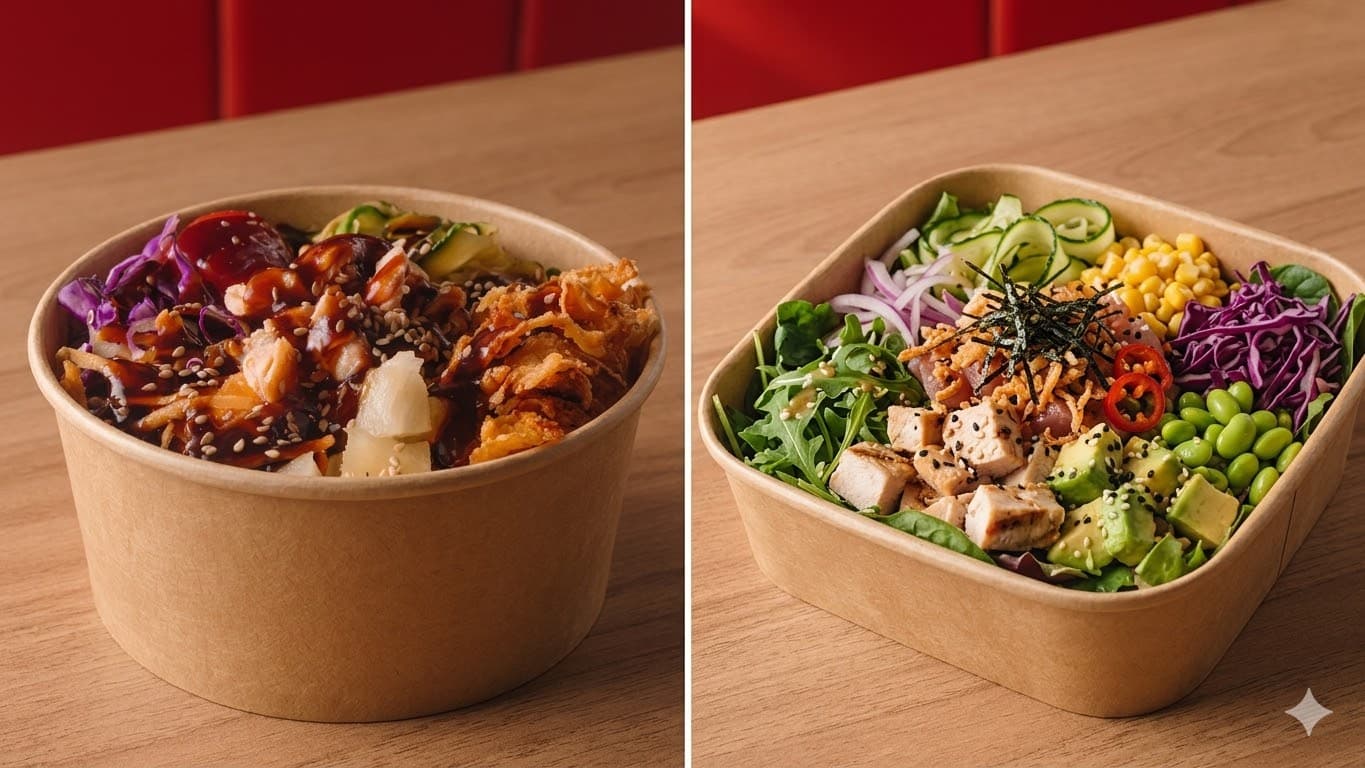
Necesitas el recipiente de papel adecuado para tu comida. La elección depende del calor, el tamaño y el tipo de alimento. Más del 60 % de las personas eligen recipientes de papel ecológicos, biodegradables o compostables para alimentos fríos y calientes.
El bol de papel ecológico para ensaladas es ideal para ensaladas y alimentos fríos.
El tazón de sopa de papel biodegradable mantiene la sopa caliente y en buen estado.
El recipiente de papel compostable es útil para muchos alimentos y ayuda al planeta.
Puedes elegir los recipientes de papel según su tamaño, el material del que están hechos y si son a prueba de fugas. Los envases ecológicos para llevar te permiten servir la comida de una mejor manera.
Elige el tamaño adecuado de recipiente de papel para tu comida. Los recipientes pequeños son ideales para aperitivos. Los medianos son perfectos para ensaladas y fideos. Los grandes son ideales para sopas y comidas abundantes.
Utiliza recipientes de papel ecológicos, biodegradables o compostables. Estos recipientes conservan los alimentos frescos y ayudan al planeta. Reducen los residuos y atraen a personas preocupadas por el medio ambiente.
Encuentra recipientes de papel resistentes a las fugas y con aislamiento térmico. Los recipientes de doble pared y los recubrimientos especiales mantienen la comida caliente o fría. Además, evitan los derrames.
Los tazones de papel pequeños son ideales para refrigerios y bocadillos ligeros. Puedes usarlos para papas fritas, fruta, palomitas de maíz o un postre pequeño. Estos tazones suelen tener una capacidad de 8 a 12 onzas. Son fáciles de transportar para llevar y perfectos para porciones individuales. Aquí tienes un vistazo rápido:
|
Tamaño del tazón (oz) |
Tipo de snack |
|---|---|
|
8-12 |
Papas fritas, fruta, palomitas de maíz |
También puedes encontrar cuencos para aperitivos de pared simple, doble y reforzados. Cada uno es ideal para diferentes tipos de aperitivos, desde fruta fría hasta bocadillos calientes. Los cuencos de papel pequeños mantienen tus aperitivos ordenados y fáciles de disfrutar.
Los tazones de papel medianos son ideales para ensaladas, fideos y almuerzos. Puedes usarlos para pedidos o comidas para llevar. Estos tazones suelen tener una capacidad de 350 a 750 ml. Son perfectos para ensaladas, tazones de cereales y platos básicos de arroz o pasta. Consulta esta tabla:
|
Tamaño (oz) |
Uso común |
|---|---|
|
12 |
Ensaladas, boles para el almuerzo |
|
16 |
Pedidos para llevar |
Los cuencos de papel de tamaño mediano ofrecen las porciones perfectas para una comida completa. En ellos se pueden servir tanto alimentos fríos como calientes.
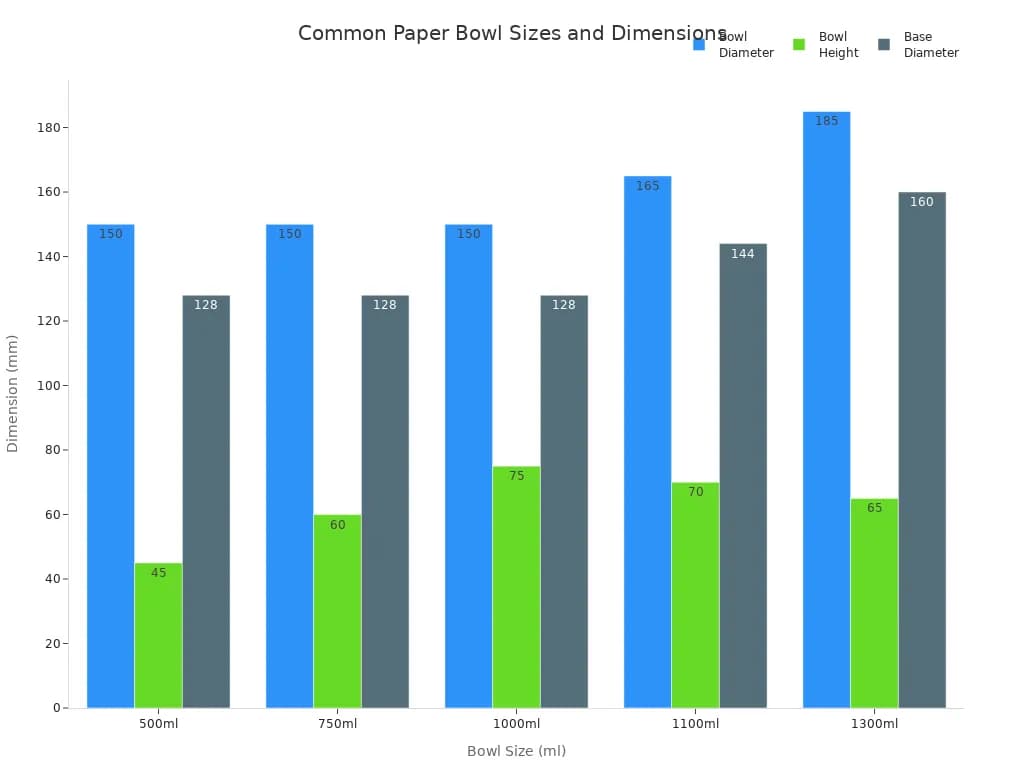
Los tazones de papel grandes son perfectos para sopas, guisos y comidas familiares. Puedes usarlos para pedidos grandes de comida para llevar o para grupos. Estos tazones tienen una capacidad de 770 ml o más. Son ideales para fideos abundantes, ensaladas grandes y aperitivos para fiestas. Aquí tienes una guía rápida:
|
Tamaño del recipiente (ml) |
Porciones o tipos de alimentos recomendados |
|---|---|
|
1000-1300 |
Ensaladas grandes, guisos, postres familiares. |
|
1100 |
Fideos abundantes, platos de arroz |
|
1300 |
Raciones grandes, aperitivos para fiestas |
Los recipientes de papel grandes permiten servir porciones generosas sin derrames. Facilitan la comida para llevar, tanto para grupos grandes como para familias.
Siempre puedes adaptar el tamaño de los recipientes de papel a tu menú y al tamaño de las porciones. De esta manera, tu servicio de comida para llevar será fluido y tus clientes estarán satisfechos.
Al elegir un tazón de papel, es importante saber de qué material está hecho. El tazón adecuado mantiene los alimentos frescos y a la temperatura correcta. Además, ayuda al planeta. Veamos cómo funcionan los diferentes tipos de tazones para sopas calientes, ensaladas y otros alimentos.
Las ensaladas necesitan un recipiente que las mantenga frescas y no gotee. Los recipientes de papel ecológicos para ensaladas están hechos de pulpa de papel resistente y recubrimientos especiales. Estos recipientes son ideales para alimentos fríos como ensaladas de hojas verdes, frutas y pasta. Impiden que la humedad y el aceite se filtren, por lo que los aderezos se mantienen dentro.
Aquí les mostramos brevemente cómo funcionan estos tazones:
|
Tipo de tazón |
Ventajas |
Limitaciones |
|---|---|---|
|
Ensaladeras resistentes a la grasa |
Evita fugas de aceite y que los alimentos se empapen; funciona con aderezos cremosos. |
Cuesta un poco más y puede que no se descomponga en el compost. |
|
Cuencos de papel para ensalada de alta resistencia |
Soporta alimentos pesados, no se dobla y tiene un revestimiento que resiste la humedad. |
Cuesta más y es un poco más pesado de enviar. |
|
Cartón compostable revestido de PLA |
No gotea, resiste el aceite, se descompone en compostadores especiales. |
Necesita compostaje industrial, cuesta un poco más. |
|
Papel Kraft recubierto de arcilla |
Bloquea la humedad y el aceite, se puede reciclar. |
No apto para alimentos muy húmedos, menos compostable que los cuencos sin recubrimiento. |
Las opciones de ensaladeras de papel ecológicas mantienen los alimentos fríos seguros y frescos. Puede servir platos fríos sin fugas ni alimentos blandos. Estos recipientes también ayudan al medio ambiente, por lo que son una opción inteligente para su menú. Si desea más opciones, consulte ensaladera de papel ecológica .
Para una sopa caliente, se necesita un tazón resistente que aguante el calor. Los tazones de sopa de papel biodegradables están fabricados con doble pared, papel reciclado y recubrimientos de origen vegetal. Estos tazones evitan fugas y mantienen la sopa caliente por más tiempo.
Compare los principales materiales para tazones de sopa:
|
Tipo de material |
Descripción |
Apto para alimentos calientes |
Apto para alimentos fríos |
|---|---|---|---|
|
Material base |
Pulpa de papel de buena calidad, resistente y fácil de moldear. |
Funciona con recubrimientos resistentes al calor. |
Funciona para alimentos con humedad. |
|
Recubrimientos internos |
El polietileno (PE) y el ácido poliláctico (PLA) evitan la entrada de humedad y grasa. |
El PE no es biodegradable, el PLA puede descomponerse. |
El PE evita que los alimentos se empapen, el PLA es mejor para el planeta. |
|
Opciones ecológicas |
Cuencos que indiquen que son biodegradables, compostables o reciclables. |
Debe utilizarse PLA o recubrimientos a base de agua. |
No debe contener sustancias químicas nocivas. |
|
Límites de temperatura |
La mayoría de los recipientes para alimentos calientes soportan hasta 100 °C (212 °F). |
El calor prolongado puede dañar los tazones más débiles. |
Hecho para mantener los alimentos frescos y dentro |
Los tazones de doble pared mantienen la sopa caliente hasta por una hora. Los tazones con recubrimiento de PE conservan la sopa caliente aproximadamente un 30 % más que los tazones sin recubrimiento. Los recubrimientos de PLA son adecuados para alimentos calientes, pero pueden deteriorarse si se calientan demasiado.
Aquí tenéis una tabla que muestra las temperaturas más altas para diferentes cuencos de sopa de papel biodegradables:
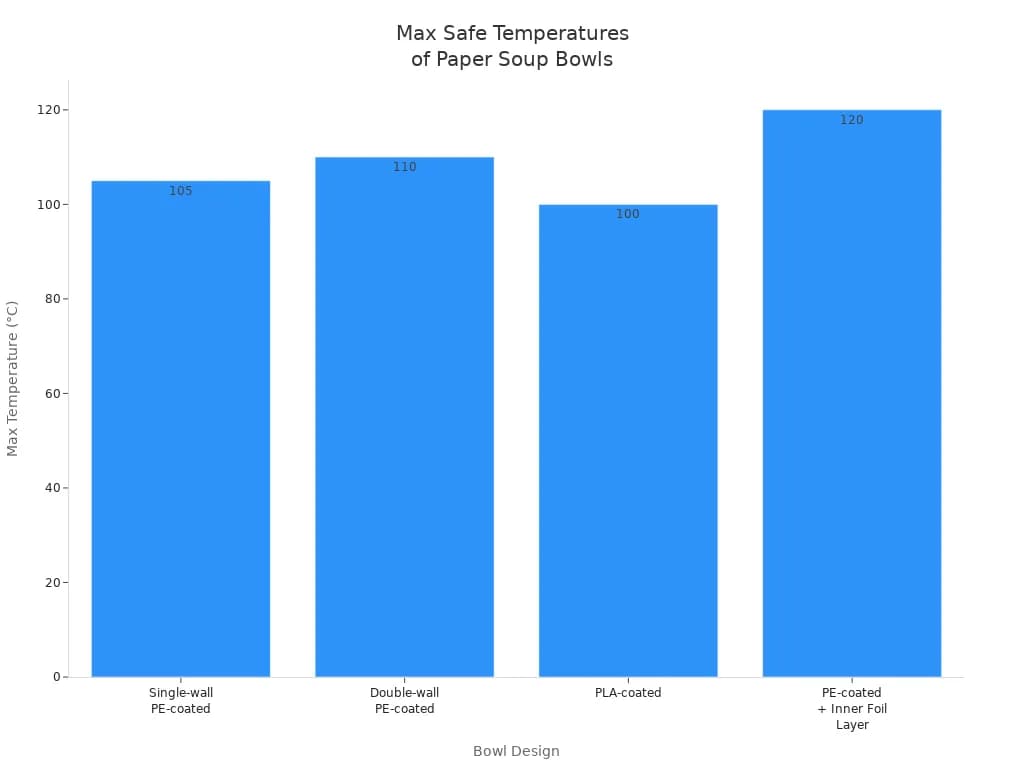
Si necesita un tazón para sopa caliente, elija un tazón de sopa de papel biodegradable con doble pared y revestimiento resistente al calor. Estos tazones mantienen la sopa caliente y evitan fugas. Puede encontrar más en tazón de sopa de papel biodegradable .
A veces se necesita un recipiente para alimentos fríos y calientes. Las opciones de recipientes de papel compostables utilizan bagazo, fibra de bambú o papel revestido de PLA. Estos recipientes son aptos para diversas temperaturas y son respetuosos con el medio ambiente.
Aquí hay una tabla sobre las necesidades de compostaje para diferentes recipientes de papel compostables:
|
Tipo de tazón |
Requisitos para el compostaje |
Notas |
|---|---|---|
|
Cuencos de bagazo |
Necesita compostaje industrial |
No apto para compostaje doméstico. |
|
Cuencos de papel revestidos de PLA |
Necesita compostaje industrial |
No apto para microondas; el revestimiento de PLA no se degrada en casa. |
|
Cuencos de fibra de bambú |
Comprueba si es compostable; algunos contienen melamina. |
La resistencia al calor varía; asegúrese de que sean totalmente compostables. |
Los recipientes de papel compostable conservan el calor y evitan fugas. Los recipientes de papel kraft de doble pared mantienen el 65 % del calor después de 20 minutos y evitan fugas durante más de cuatro horas. Los recipientes de bagazo son tan eficaces como los de plástico para evitar fugas y mantienen la sopa caliente.
|
Material |
Retención de calor (%) |
Duración de la resistencia a las fugas (horas) |
|---|---|---|
|
Papel Kraft de doble pared |
65% después de 20 minutos |
Más de 4 horas |
|
Bagazo |
60% después de 20 minutos |
Igual que el plástico |
Puedes usar tazones de papel compostables para sopas, ensaladas, fideos y más. Estos tazones mantienen los alimentos seguros y ayudan al planeta. Si quieres saber más, visita tazón de papel compostable .
Consejo: Utiliza siempre un recipiente de papel adecuado a la temperatura y el tipo de alimento. Así obtendrás mejores resultados y cuidarás el planeta.
Hay muchos materiales para tazones de papel entre los que elegir. Escoge el tazón adecuado para sopas, ensaladas u otros alimentos. Así mantendrás los alimentos seguros, a tus clientes satisfechos y tu negocio será más sostenible.
Elegir los mejores recipientes de papel para tu menú puede parecer complicado, pero puedes simplificarlo centrándote en lo más importante: mantener la comida fresca, segura y fácil de disfrutar. Esta guía te ayudará a ver qué características de los recipientes de papel son las mejores para alimentos fríos y calientes, para que puedas servir cada comida con total confianza.
Quieres que tu comida llegue en perfectas condiciones: que la sopa caliente se mantenga caliente, las ensaladas frías se mantengan frescas y que no se derrame nada durante el trayecto. El recipiente de papel adecuado marca la diferencia. Esto es lo que debes buscar:
Los cuencos de papel más gruesos (250-300 g/m²) proporcionan un mejor aislamiento y evitan que el cuenco se empape.
Los cuencos de papel de doble pared añaden una capa extra que mantiene los alimentos a la temperatura adecuada y hace que el cuenco sea cómodo de sujetar.
Los recubrimientos especiales, como el PLA o el PE, ayudan a prevenir fugas de sopas, aderezos o salsas.
Las bases reforzadas y los fondos termosellados mantienen la resistencia del recipiente, incluso con alimentos pesados o calientes.
Analicemos las características más importantes en una tabla rápida:
|
Característica |
Descripción |
|---|---|
|
Grosor del papel |
El papel más grueso (250-300 g/m²) mantiene la comida caliente o fría y evita que el recipiente se ablande. |
|
Prevención de fugas |
Los bordes de doble laminado, las estructuras acanaladas y los recubrimientos multicapa evitan fugas y goteos. |
|
Construcción de la base |
Las bases reforzadas distribuyen el peso de manera uniforme y evitan que se deformen bajo el peso de los alimentos calientes. |
|
Espesor/Capas de la pared |
Los cuencos de doble pared proporcionan un mayor aislamiento y comodidad. |
|
Fondo termosellado |
Barrera resistente para alimentos con alto contenido líquido, que evita fugas. |
Como puedes ver, los tazones de papel de doble pared con bases reforzadas y recubrimientos especiales son ideales tanto para alimentos fríos como calientes. Mantienen la sopa caliente, las ensaladas frescas y los aperitivos crujientes. Si quieres saber cómo elegir el tamaño adecuado de tazón de papel, piensa en el tipo de comida que sirves y cuánto tiempo necesita mantenerse caliente o fría.
Aquí tienes una tabla que muestra cómo los diferentes tamaños de cuencos de papel se adaptan a diferentes necesidades:
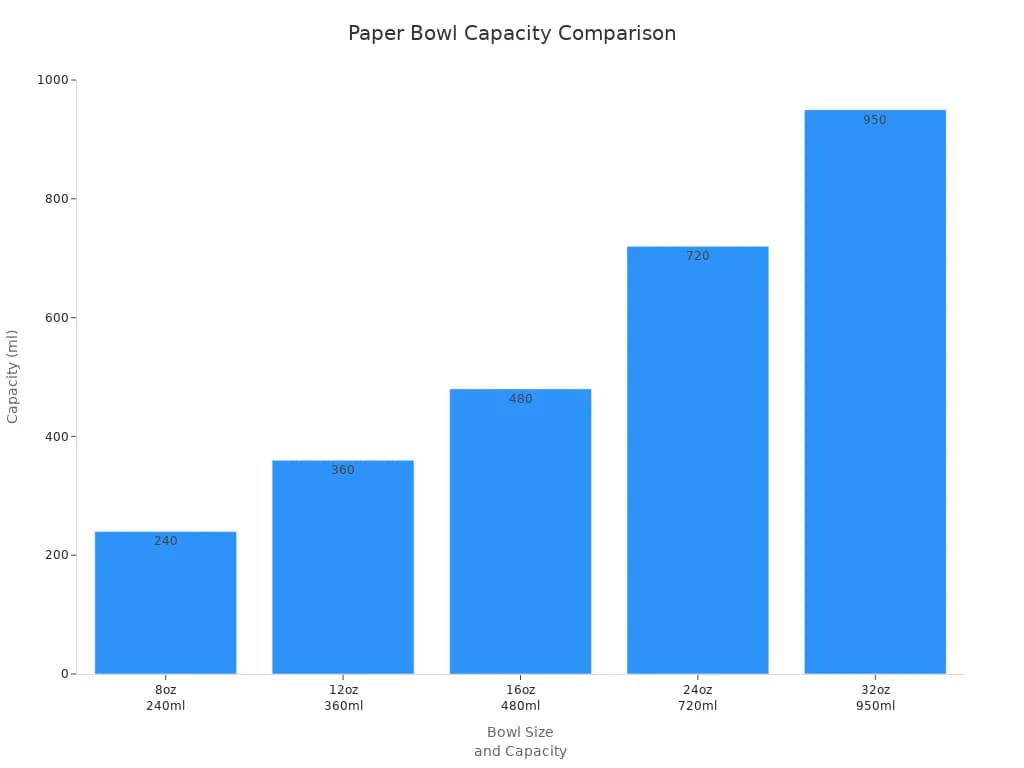
Puedes usar esta guía para encontrar el recipiente de papel adecuado para tu menú:
|
Tamaño del tazón |
Capacidad (oz/ml) |
Mejor uso |
Ventajas clave |
|---|---|---|---|
|
8 onzas |
~240 ml |
Guarniciones, postres |
Control de porciones rentable |
|
12 onzas |
~360 ml |
Ensaladas estándar |
Versátil, ampliamente utilizado. |
|
16 onzas |
~480 ml |
almuerzos para llevar |
Equilibrado, resistente al aceite y a la humedad. |
|
24 onzas |
~720 ml |
Comidas familiares |
Reduce el embalaje, respetuoso con el medio ambiente. |
|
32 onzas |
~950 ml |
Catering, fiestas |
Máxima capacidad, beneficio de sostenibilidad |
Si te preguntas cómo elegir el tamaño adecuado de un recipiente de papel, empieza por considerar el tamaño de la porción y el tipo de comida que sirves. Por ejemplo, los recipientes de papel de 473 ml (16 oz) son ideales para almuerzos para llevar, ya que resisten tanto el aceite como la humedad, por lo que son perfectos para alimentos fríos y calientes. Los recipientes más grandes, como los de 710 ml (24 oz) o 946 ml (32 oz), son ideales para compartir o para servicios de catering.
Consejo: Comprueba siempre que tu recipiente de papel tenga capas aislantes y revestimientos a prueba de fugas. Estas características ayudan a mantener los alimentos a la temperatura adecuada y evitan derrames.
Una tapa segura es tan importante como el propio recipiente. Es fundamental mantener los alimentos en buen estado durante el reparto o la comida para llevar, y la tapa adecuada puede evitar derrames y conservar su frescura.
Esto es lo que debes saber sobre las opciones de tapa:
Las tapas de plástico proporcionan un cierre hermético y funcionan bien para sopas y ensaladas.
Las tapas de cartón son más gruesas y pueden laminarse simple o doblemente para una mayor resistencia a la humedad.
Las tapas de polipropileno (PP) soportan altas temperaturas, hasta 160 °C (320 °F), por lo que son ideales para alimentos calientes.
Las tapas de PLA son las mejores para alimentos fríos porque tienen una menor tolerancia al calor.
Consulta esta tabla para una comparación rápida:
|
Material de la tapa |
Rango de espesor |
Características principales |
|---|---|---|
|
Tapas de plástico |
0,2 a 0,5 mm |
Cierre flexible y hermético, ideal para sopas y ensaladas. |
|
Tapas de cartón |
0,8 a 1,2 mm |
Laminado simple para alimentos secos/fríos; laminado doble para resistencia a la humedad. |
|
Polipropileno (PP) |
N / A |
Resiste temperaturas de hasta 160 °C (320 °F), por lo que es apto para alimentos calientes. |
|
Ácido poliláctico (PLA) |
N / A |
Menor tolerancia al calor, ideal para alimentos fríos. |
|
Cartón recubierto de PVDC |
N / A |
Resistencia moderada al calor, apta para platos calientes. |
También puedes elegir entre diferentes tipos de tapa:
|
Tipo de tapa |
Características |
Mejores casos de uso |
|---|---|---|
|
Tapas ventiladas |
Evite la condensación, deje escapar el vapor. |
Comida caliente para llevar (sopas, fideos) |
|
Tapas sin ventilación |
Cierre superior, evita la entrada de aire, prolonga la frescura. |
Almacenamiento en frío, ensaladas, batidos |
|
Tapas de polipropileno |
Resistente al calor, ajuste ceñido, reduce los derrames. |
Sopas, guisos, curries |
Si sirves sopa o fideos calientes, las tapas con ventilación evitan que se ablanden al permitir que salga el vapor. Para alimentos fríos como ensaladas o postres, las tapas sin ventilación mantienen la frescura y evitan fugas. Las tapas de polipropileno son aptas tanto para alimentos calientes como fríos, lo que te brinda flexibilidad.
Al elegir los mejores recipientes y tapas de papel, te aseguras de que cada comida llegue en perfectas condiciones, fresca y lista para consumir. Esta guía te ayuda a encontrar el recipiente y la tapa de papel adecuados para cada alimento, para que puedas servir con total tranquilidad en todo momento.
Quieres que tu comida luzca y sepa deliciosa. Elegir el tamaño adecuado del recipiente de papel te ayudará a lograrlo. Primero, piensa en lo que vas a servir. Los aperitivos pequeños o las salsas caben en un recipiente de 170-230 ml. Las ensaladas o la pasta necesitan un recipiente de 295-350 ml. Los platos más contundentes, como el chili o las alitas de pollo, van en un recipiente de 470 ml. Las sopas necesitan recipientes con paredes más altas, generalmente de 350-470 ml. Para los platos con capas, usa un recipiente que tenga la capacidad adecuada y mantenga las capas unidas.
Aquí tienes una tabla sencilla que te ayudará a elegir el tazón adecuado:
|
Tamaño del tazón |
Tipo de alimento |
Descripción |
|---|---|---|
|
6-8 onzas |
Aperitivos, guarniciones |
Ideal para porciones pequeñas como salsas o aperitivos. |
|
10-12 onzas |
Platos principales |
Funciona bien para ensaladas o platos de pasta. |
|
16 onzas |
Comidas abundantes |
Ideal para preparar grandes porciones de guisos, chili o alitas de pollo. |
|
12-16 onzas |
Sopas |
Las paredes más altas facilitan el tránsito de alimentos líquidos. |
|
8-10 onzas |
Ensaladas, Pasta |
Los recipientes poco profundos son adecuados para alimentos sólidos o secos. |
|
12-16 onzas |
Alimentos mixtos |
Necesario para alimentos en capas para mantener las porciones correctas. |
También puedes consultar esta tabla para ver los tamaños de recipientes más adecuados para diferentes alimentos:
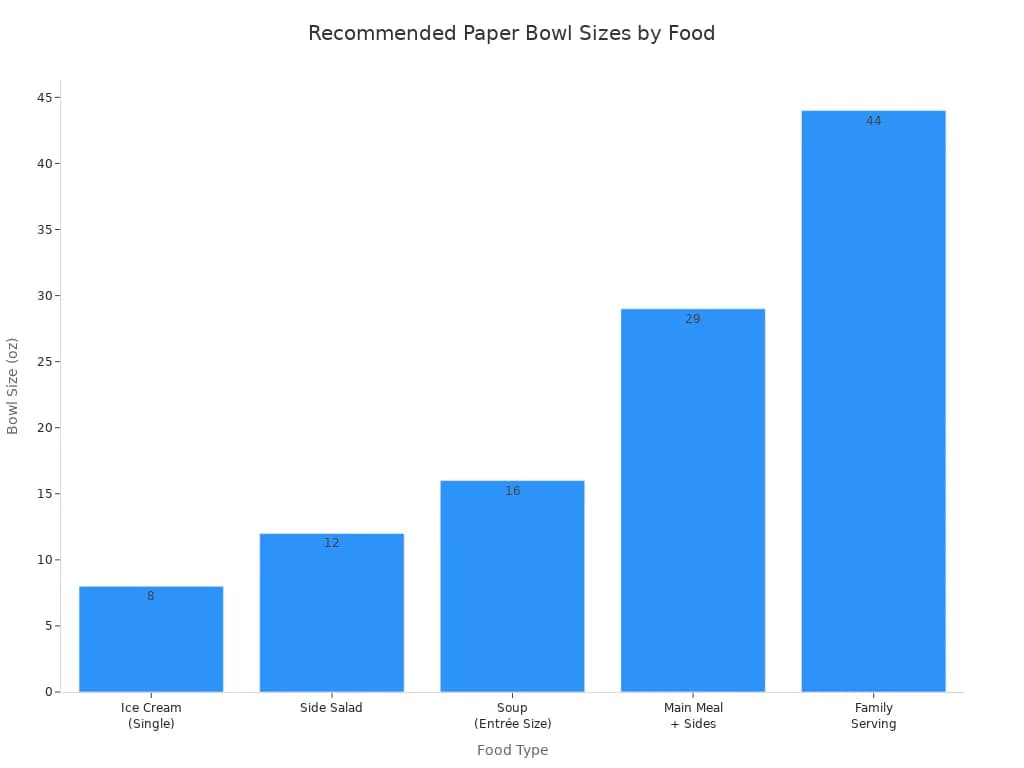
Cuando utilizas el tamaño de recipiente adecuado, tu servicio de comida para llevar funciona mejor y los clientes están contentos.
Elegir envases ecológicos beneficia tanto a tu marca como al planeta. Estos envases suelen ser más caros porque utilizan mejores materiales y recubrimientos compostables. La diferencia de precio se está reduciendo a medida que más personas optan por productos sostenibles. Puede que al principio pagues más, pero a la larga obtendrás beneficios. Los clientes se dan cuenta cuando usas envases ecológicos y, además, contribuyes a mejorar las prácticas sostenibles.
Aquí tienes una tabla para comparar los costes:
|
Aspecto |
cuencos de papel sostenibles |
Opciones convencionales |
|---|---|---|
|
Costo |
Suele ser más caro |
Suele ser más barato |
|
Factores de costo |
Mejores materiales, recubrimientos compostables |
Plásticos producidos en masa |
|
Tendencias de precios |
Brecha menor a medida que crece la demanda |
Estable o en declive |
|
Valor a largo plazo |
Mejor imagen de marca, cumple las reglas |
Coste inicial más bajo |
Obtener una certificación de sostenibilidad puede encarecer los cuencos, pero mejora la reputación de la marca. A medida que más personas eligen cuencos ecológicos, la diferencia de precio se va reduciendo.
Personaliza el tamaño, la forma y el diseño de tus cuencos de papel. Muchos proveedores te permiten imprimir tu logotipo, elegir tamaños especiales o usar un empaque único para pedidos grandes. Puedes seleccionar el tamaño ideal para tu menú y añadir tus colores o logotipo. Los cuencos personalizados te ayudan a combinar diferentes alimentos y porciones, para que cada comida luzca impecable.
Si quieres mejorar tus recipientes para alimentos, céntrate en el tamaño y la forma adecuados de los cuencos. Así conseguirás mejores resultados, menos desperdicio y un menú que se adapte a todas las necesidades.
Quieres que tu comida se mantenga fresca y luzca impecable. Elegir el recipiente de papel adecuado para alimentos fríos o calientes marca la diferencia. Las opciones de recipientes de papel ecológicos, biodegradables y compostables te ayudan a servir tus comidas y a cuidar el planeta. Puedes elegir un recipiente de papel que se ajuste a tus necesidades, te permita ahorrar dinero y personalizarlo para pedidos grandes.
Adapta el tamaño del recipiente de papel al tipo de comida.
Elija un material de papel para el recipiente, ya sea para platos calientes o fríos.
Pruebe con diseños personalizados de cuencos de papel para pedidos al por mayor.
Consejo: Un recipiente de papel con las características adecuadas mantiene los alimentos seguros y a los clientes satisfechos.
Debes comprobar la temperatura de los alimentos y el tamaño de las porciones. Elige un recipiente de papel con las dimensiones y el material adecuados para tu menú.
Sí, puedes usar un tazón de papel resistente para sopa caliente o ensalada fría. Simplemente elige un tamaño adecuado para la comida.
Puedes encontrar una tabla de tamaños de recipientes de papel en línea. Esta tabla te ayuda a comparar los tamaños más comunes de recipientes de papel para diferentes alimentos.






Xiamen GLAMAN environmental technology Co., Ltd




 Teléfono : +86 18759299872
 Correo electrónico : zheng@glamanpaperlid.com